
Christmas in Catalonia has customs you won’t see anywhere else. If it’s your first Christmas here, or you’re visiting, this is what you’ll come across in Barcelona from early December to the Three Kings.
At a glance
- The tió
- A log that “poops” presents
- The caganer
- The most famous figure in the Catalan nativity scene
- The 25th
- Escudella i carn d’olla
- The 26th
- Sant Esteve, a public holiday, with cannelloni
The tió
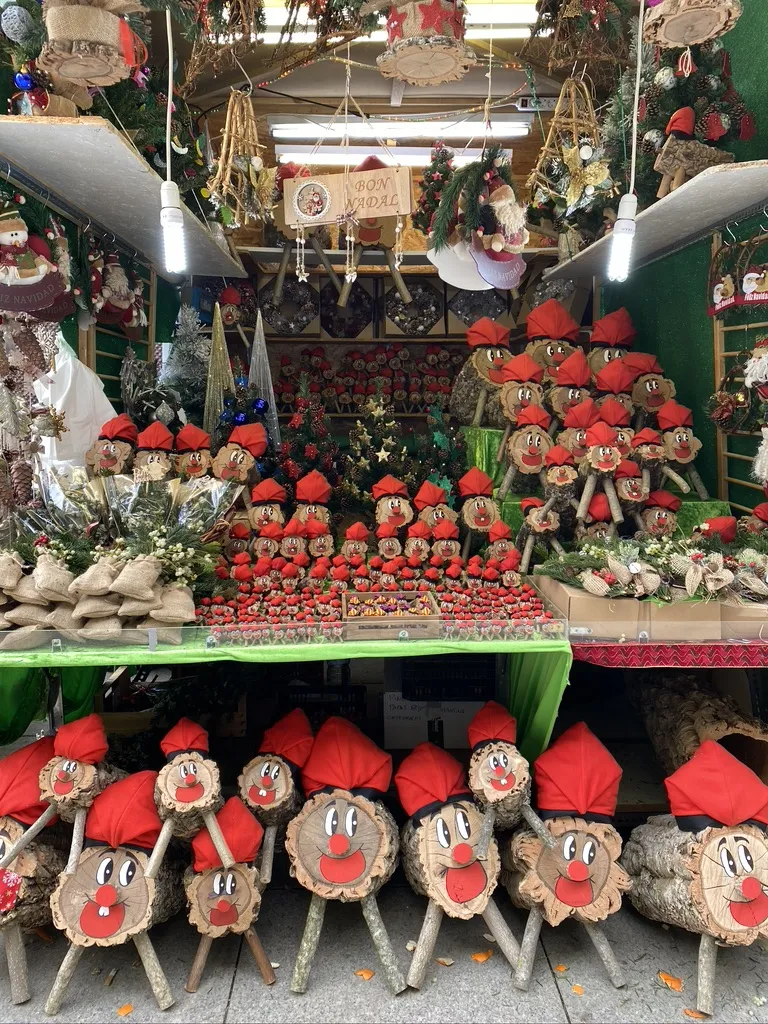
It’s children’s favourite tradition. The tió is a log with a smiling face, a red barretina hat and a blanket to keep it warm. It comes home in early December (many families bring it out on the 8th, the Immaculate Conception holiday) and until Christmas it has to be “fed” every night: a bit of bread, tangerine peel, biscuits.
On Christmas Eve or Christmas Day, children hit it with a stick while singing its song so that it will “poop”. Under the blanket appear small presents, turrón and sweets. When there’s nothing left, the tió drops a herring, a garlic clove or a lump of coal.
They’re sold at every Christmas fair, especially the Fira de Santa Llúcia, in front of the cathedral.
The caganer and the nativity scene
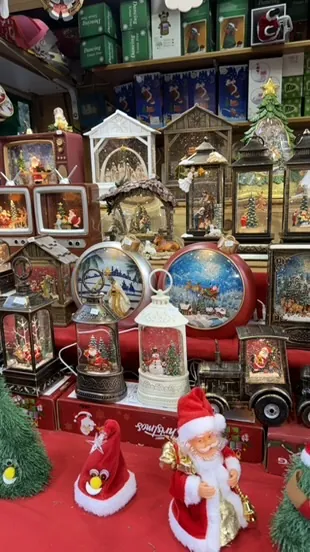
The nativity scene (pessebre) is the Christmas decoration in Catalan homes, with its moss, its tinfoil river and its little figures. And tucked away in a corner there’s always the caganer: a farmer in a barretina, crouching down to do his business. He’s said to bring good luck and fertility to the land, and finding him is part of the game.
Today there are caganers of footballers, politicians, singers and characters from all over the world, and they’ve become one of Barcelona’s best-selling souvenirs. I tell you where to see the best ones in nativity scenes in Barcelona and where to buy them in the Christmas markets.
What people eat at Christmas in Catalonia
The 25th: escudella i carn d’olla
Christmas Day lunch is escudella i carn d’olla: first a broth with galets, pasta shaped like giant shells, then the meat and vegetables it was made with, including the pilota, a big meatball. Where to try it is in escudella in Barcelona.
The 26th: Sant Esteve cannelloni
26 December, Sant Esteve, is a public holiday in Catalonia (but not in the rest of Spain). Families get together again for lunch, and the dish is cannelloni, traditionally made with the meat left over from the escudella.
Turrón, neules and cava
For dessert there’s turrón (soft Xixona, hard Alicante, burnt-cream yolk turrón, chocolate), neules, thin rolled wafers, and cava for the toast. The best places are in where to buy turrón in Barcelona. And panettone is more and more popular: here are the best panettone in Barcelona.
Other customs of the season
- Missa del Gall: midnight mass on 24 December.
- Els Pastorets: popular plays about the shepherds of Bethlehem, with devils and angels. They’re staged in theatres and local cultural centres all over Catalonia during the holidays.
- The Fira de Santa Llúcia: the Christmas fair in front of the cathedral, dating back to 1786.
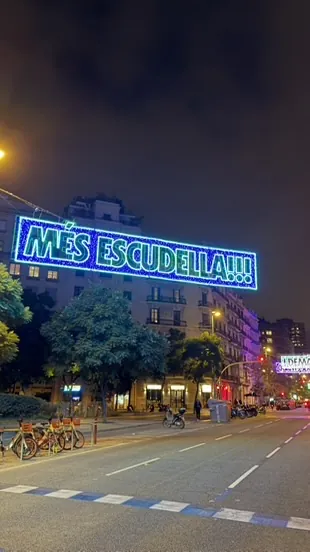
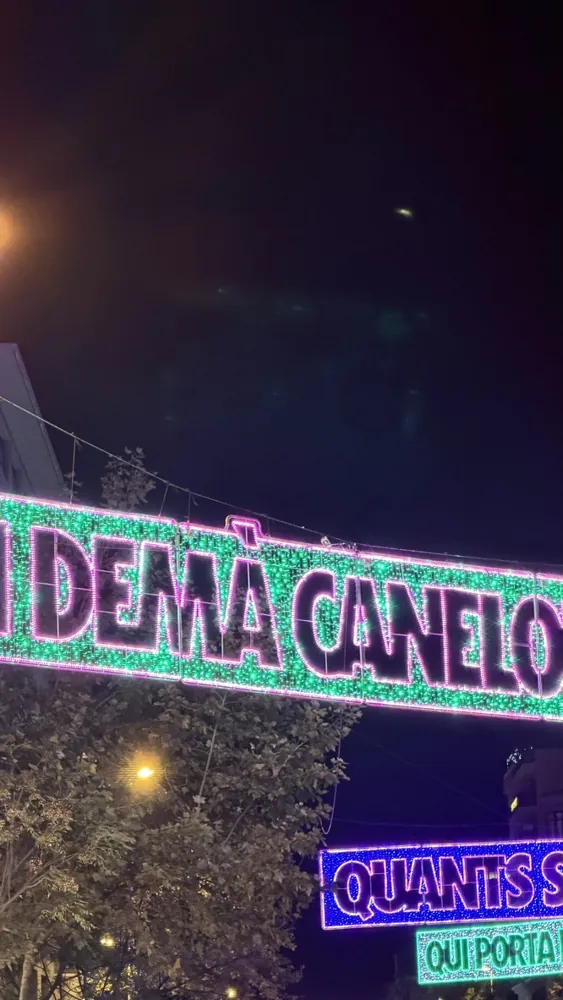
- The Christmas lights switch-on, which this year is on 26 November: more in Christmas lights Barcelona 2026.
And the celebrations go on: the New Year customs are in New Year’s Eve in Barcelona 2026 and the Three Kings ones in the Three Kings Parade 2027. Everything else is in Christmas in Barcelona.
FAQ
What is the Catalan tió de Nadal
A wooden log with a face, a barretina hat and a blanket that Catalan families ‘feed’ from early December. On Christmas Eve or Christmas Day, children hit it with a stick while singing a song, and the tió ‘poops’ presents and sweets hidden under the blanket.
What is a caganer
A figure from the Catalan nativity scene: a character crouching down to do his business, hidden in a corner of the scene. Today there are caganers of footballers, politicians and celebrities from all over the world.
What do people eat at Christmas in Catalonia
On 25 December, escudella i carn d’olla, a broth with galets pasta followed by the meat. On the 26th, Sant Esteve, cannelloni made with the leftover meat. For dessert, turrón, neules and cava.
 📖 Read nextChristmas villages in Catalonia: markets and living nativity scenes